
Maison dite de la Duchesse Anne

Historical sites and monuments
Listed or registered (CNMHS)
Art and history, Living museum, House
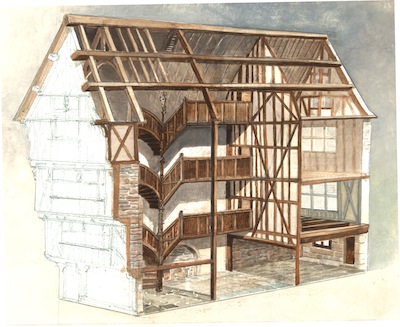
The house known as the ‘Duchess Anne’s House’ in Morlaix, Brittany, is a particularly well-preserved example of a lantern house, an architectural feature emblematic of the town during the Renaissance
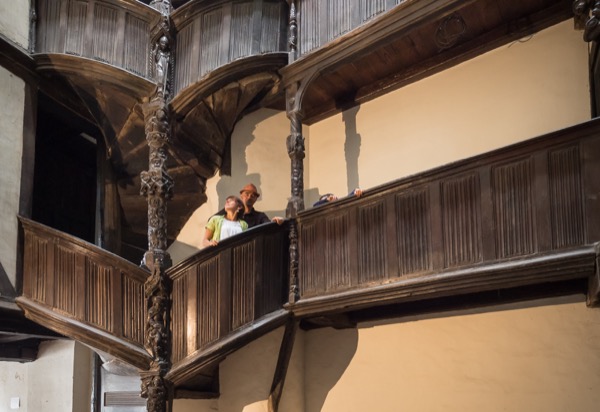
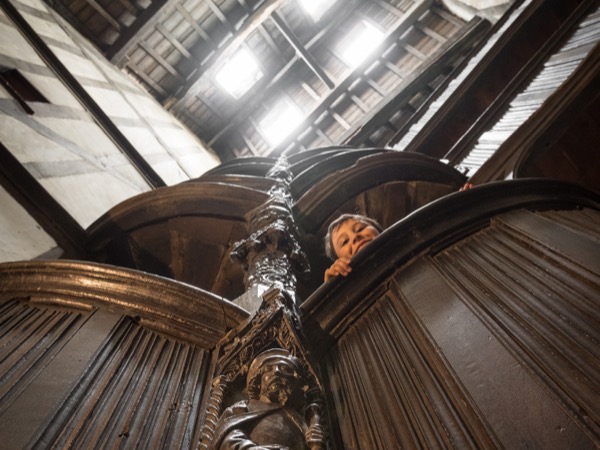
Visitors can explore the lantern – a covered inner courtyard – which houses a monumental fireplace and a richly carved oak spiral staircase, providing access between the front and rear rooms across three storeys.
On 28 May 1883, Jules Ferry, Minister for Public Instruction and Fine Arts, signed the decree classifying the house known as the ‘Duchess Anne’s House’ as a ‘Historic Monument’. It was the first monument in Morlaix to benefit from this conservation measure and the only one from the entire 19th century.
A noble family residence, built around 1530, the house known as the ‘Duchess Anne’s House’ narrowly escaped demolition planned as part of major urban development works. It owes its preservation to the interest aroused by its covered courtyard – its ‘lantern’ – which houses its remarkable carved staircase.
This unique and much-admired staircase prompted the following glowing comment from Prosper Mérimée, then Inspector-General of Historic Monuments, upon discovering it during his visit to the town in 1835:
‘In a house on Rue des Nobles (now Rue du Mur) there is a magnificent 15th-century Gothic wooden staircase, perfectly preserved, despite being in daily use. Its ornamentation, which varies on each floor, is of unparalleled delicacy. I had never seen anything more perfect or of better taste.”
In the eyes of town planners, this fame was not enough to save the building from demolition. At best, the idea was to dismantle the staircase to ensure at least its preservation. It was to the credit of Henri de Lestang du Rusquec that he recognised the full importance of preserving the staircase in its original state, in situ, within the setting provided by the house.
Henri de Lestang du Rusquec (1822–1906), mayor of Sibiril and owner of Kerouzéré Castle—which was listed on the same day as the house known as the ‘Duchess Anne’s House’—purchased it in October 1882 and secured its listing eight months later.
What irony there is in this ‘crime of protruding some fifty centimetres beyond the prescribed building line’, as highlighted by the illustrator and novelist Albert Robida, who was delighted to note that ‘this fine example of the stately homes of Morlaix of yesteryear’ had finally been preserved and restored.
Much to the delight of lovers of heritage, art and its history, the house known as the Duchess Anne’s House is still committing this ‘crime’. It is set to continue doing so for many years to come, thanks to the planned restoration work, which will open up larger areas to visitors whilst ensuring the building’s long-term survival.
Visitors can explore the lantern – a covered inner courtyard – which houses a monumental fireplace and a richly carved oak spiral staircase, providing access between the front and rear rooms across three storeys.
On 28 May 1883, Jules Ferry, Minister for Public Instruction and Fine Arts, signed the decree classifying the house known as the ‘Duchess Anne’s House’ as a ‘Historic Monument’. It was the first monument in Morlaix to benefit from this conservation measure and the only one from the entire 19th century.
A noble family residence, built around 1530, the house known as the ‘Duchess Anne’s House’ narrowly escaped demolition planned as part of major urban development works. It owes its preservation to the interest aroused by its covered courtyard – its ‘lantern’ – which houses its remarkable carved staircase.
This unique and much-admired staircase prompted the following glowing comment from Prosper Mérimée, then Inspector-General of Historic Monuments, upon discovering it during his visit to the town in 1835:
‘In a house on Rue des Nobles (now Rue du Mur) there is a magnificent 15th-century Gothic wooden staircase, perfectly preserved, despite being in daily use. Its ornamentation, which varies on each floor, is of unparalleled delicacy. I had never seen anything more perfect or of better taste.”
In the eyes of town planners, this fame was not enough to save the building from demolition. At best, the idea was to dismantle the staircase to ensure at least its preservation. It was to the credit of Henri de Lestang du Rusquec that he recognised the full importance of preserving the staircase in its original state, in situ, within the setting provided by the house.
Henri de Lestang du Rusquec (1822–1906), mayor of Sibiril and owner of Kerouzéré Castle—which was listed on the same day as the house known as the ‘Duchess Anne’s House’—purchased it in October 1882 and secured its listing eight months later.
What irony there is in this ‘crime of protruding some fifty centimetres beyond the prescribed building line’, as highlighted by the illustrator and novelist Albert Robida, who was delighted to note that ‘this fine example of the stately homes of Morlaix of yesteryear’ had finally been preserved and restored.
Much to the delight of lovers of heritage, art and its history, the house known as the Duchess Anne’s House is still committing this ‘crime’. It is set to continue doing so for many years to come, thanks to the planned restoration work, which will open up larger areas to visitors whilst ensuring the building’s long-term survival.
The house known as the ‘Duchess Anne’s House’ in Morlaix, Brittany, is a particularly well-preserved example of a lantern house, an architectural feature emblematic of the town during the Renaissance.
Visitors can explore the lantern – a covered inner courtyard – which houses a monumental fireplace and a richly carved oak spiral staircase, providing access between the front and rear rooms across three storeys.
On 28 May 1883, Jules Ferry, Minister for Public Instruction and Fine Arts, signed the decree classifying the house known as the House of Duchess Anne ‘as a Historic Monument’. It was the first monument in Morlaix to benefit from this conservation measure and the only one from the entire 19th century.
A noble family residence, built around 1530, the house known as the ‘Duchess Anne’s House’ narrowly escaped demolition planned as part of major urban redevelopment works. It owes its preservation to the interest aroused by its covered courtyard – its ‘lantern’ – which houses its remarkable carved staircase.
This unique and much-admired staircase prompted this glowing comment from Prosper Mérimée, then Inspector-General of Historic Monuments, upon discovering it during his visit to the town in 1835:
‘In a house on Rue des Nobles (now Rue du Mur) there is a magnificent 15th-century Gothic wooden staircase, perfectly preserved, despite being in daily use. Its ornamentation, which varies on each floor, is of unparalleled delicacy. I had never seen anything more perfect or of better taste.”
In the eyes of town planners, this fame was not enough to save the building from demolition. At best, it was thought that the staircase might be dismantled to ensure at least its preservation. It was to the credit of Henri de Lestang du Rusquec that he recognised the full importance of preserving the staircase in its original state, in situ, within the setting provided by the house.
Henri de Lestang du Rusquec (1822–1906), mayor of Sibiril and owner of Kerouzéré Castle—which was listed on the same day as the house known as the ‘Duchess Anne’s House’—purchased it in October 1882 and secured its listing eight months later.
What irony there is in this ‘crime of protruding some fifty centimetres beyond the prescribed building line’, highlighted by the illustrator and novelist Albert Robida, who was delighted to note that ‘this fine example of the stately homes of Morlaix of yesteryear’ had finally been preserved and restored.
Much to the delight of lovers of heritage, art and its history, the house known as the ‘Duchess Anne House’ is still committing this ‘crime’. It is set to continue doing so for many years to come, thanks to the planned restoration work, which will open up larger areas to visitors whilst ensuring the building’s long-term preservation.
Until 31 October, the house will be open from Monday to Saturday, from 2 pm to 5 pm.
Visitors can explore the lantern – a covered inner courtyard – which houses a monumental fireplace and a richly carved oak spiral staircase, providing access between the front and rear rooms across three storeys.
On 28 May 1883, Jules Ferry, Minister for Public Instruction and Fine Arts, signed the decree classifying the house known as the House of Duchess Anne ‘as a Historic Monument’. It was the first monument in Morlaix to benefit from this conservation measure and the only one from the entire 19th century.
A noble family residence, built around 1530, the house known as the ‘Duchess Anne’s House’ narrowly escaped demolition planned as part of major urban redevelopment works. It owes its preservation to the interest aroused by its covered courtyard – its ‘lantern’ – which houses its remarkable carved staircase.
This unique and much-admired staircase prompted this glowing comment from Prosper Mérimée, then Inspector-General of Historic Monuments, upon discovering it during his visit to the town in 1835:
‘In a house on Rue des Nobles (now Rue du Mur) there is a magnificent 15th-century Gothic wooden staircase, perfectly preserved, despite being in daily use. Its ornamentation, which varies on each floor, is of unparalleled delicacy. I had never seen anything more perfect or of better taste.”
In the eyes of town planners, this fame was not enough to save the building from demolition. At best, it was thought that the staircase might be dismantled to ensure at least its preservation. It was to the credit of Henri de Lestang du Rusquec that he recognised the full importance of preserving the staircase in its original state, in situ, within the setting provided by the house.
Henri de Lestang du Rusquec (1822–1906), mayor of Sibiril and owner of Kerouzéré Castle—which was listed on the same day as the house known as the ‘Duchess Anne’s House’—purchased it in October 1882 and secured its listing eight months later.
What irony there is in this ‘crime of protruding some fifty centimetres beyond the prescribed building line’, highlighted by the illustrator and novelist Albert Robida, who was delighted to note that ‘this fine example of the stately homes of Morlaix of yesteryear’ had finally been preserved and restored.
Much to the delight of lovers of heritage, art and its history, the house known as the ‘Duchess Anne House’ is still committing this ‘crime’. It is set to continue doing so for many years to come, thanks to the planned restoration work, which will open up larger areas to visitors whilst ensuring the building’s long-term preservation.
Until 31 October, the house will be open from Monday to Saturday, from 2 pm to 5 pm.
Prestations et services
| Groupes | Acceptés |
Practical information
| Adress |
Maison dite de la Duchesse Anne 33, rue du Mur 29600 Morlaix |
| Téléphone | 06 20 83 61 97 |
| duchesse.anne.morlaix@gmail.com | |
| Go to the website |