
Réouverture du pavillon Tropical

Children, Science
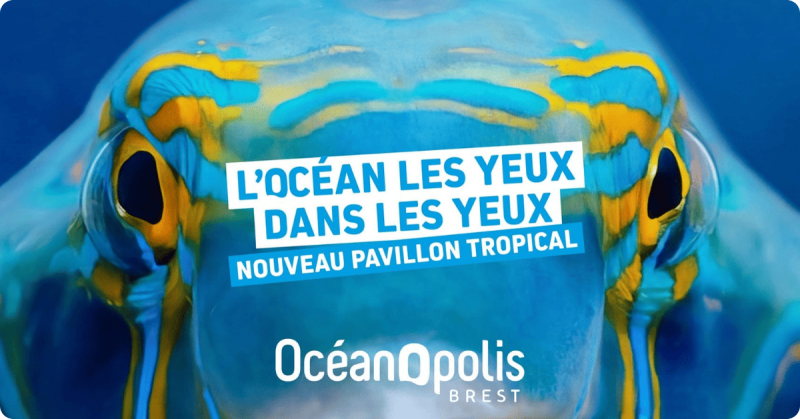
Following renovation work as part of the Métamorphose project, the time has come for the reopening! Discover what’s new following this major transformation, offering a decidedly more sensory and spectacular visitor experience.
What’s changed?
An updated exhibition design
The new Tropical Pavilion focuses on a multi-sensory immersion. You take an active role in your discoveries through innovative interactive displays.
Redesigned spaces
A new experiential, fluid and intuitive visitor route
Enlarged windows, including an impressive 28 m² curved panorama
Unprecedented views thanks to the addition of walkways and bird’s-eye vantage points
An immersive exhibition design combining projections, soundscapes and tactile installations
Enriched collections
The pavilion now houses exceptional exhibits such as a reconstructed 2.85-metre-long Megalodon jaw, a spectacular testament to the evolution of sharks through the ages.
A renewed educational approach
The museums’ curatorial ethos is combined with sensory exploration to offer multiple levels of interpretation, tailored to all audiences and all learning styles.
The four new features of the Tropical Pavilion:
- Pacific odysseys
The Pacific Ocean has always been a route for oceanic migration, governed by currents and the stars. During an immersive and poetic multimedia show, witness the dispersal of reef eggs and larvae. This dreamlike show, situated at the start of the tour, moves beyond the strictly scientific realm to inspire you to dream and take you on a journey of discovery through tropical marine biodiversity.
- The Lagoon
Following the immersive show, discover the lagoon, a reef alcove.
The lagoon, a very shallow, light-filled environment, is home to corals that live in symbiosis with zooxanthellae algae, which provide them with a large proportion of their food through photosynthesis.
In this tank, which can be viewed from above, you can admire:
- Corals
Several dozen giant clams. These giant bivalve molluscs are spectacular due to their size and their iridescent mantles.
Tropical fish
This area will be accompanied by an audio narrative written by David Wahl, an artist associated with Océanopolis, about the mysterious Palolo worm and its ancestral relationship with the peoples of the Pacific.
- Life in shoals
A brand-new cylindrical tank, 3 metres in diameter and just as high, will offer you a spectacular view of life in shoals on the sandy seabed at the foot of the coral reef. Here you will find several species rarely seen in aquariums:
A colony of over 200 garden eels (Heteroconger hassi)
Schools of razorfish (Aeoliscus strigatus)
Brightly coloured corals (Tubastrea spp.) and colonies of black coral (Cirrhipathes spiralis)
A shoal of several hundred anthias (Luzonichthys waitei)
This new aquarium, with much more subdued lighting, offers a glimpse into the richness of deep mesophotic reefs. These environments, located at depths of 40 metres and down to 200 metres, remained largely unknown to the scientific community for a long time.
- The scientists’ hut
Situated at the end of the visitor route, in the heart of Océanopolis’ tropical greenhouse, a brand-new exhibit will allow you to discover the living conditions of scientists during their field missions: the scientists’ hut.
A communal wooden shelter, either open or semi-open, and widely found in French Guiana and throughout the Caribbean, this traditional Amerindian structure inspired the CNRS to establish a large research station in French Guiana, in the heart of the Nouragues Nature Reserve.
The Océanopolis scientific carbet recreates this atmosphere: exposed wooden framework, high roof, an open space overlooking dense vegetation, humidity fluctuating between 80 and 100 per cent, a temperature of around 25 °C, and light filtered through the thick canopy.
Inside the carbet, you will discover:
A monumental mural over 5 metres high and 4 metres wide depicting the plant species found at different levels in the French Guiana forest
Ten display cases featuring wax models of seeds created by the visual artist Louis de Torhout
These works highlight the many different modes of plant reproduction and dispersal, as well as the subtle interplay between plants, animals and natural phenomena (wind, water, gravity, humidity) necessary for their survival in this competitive environment.
Updated themes:
Whilst the main themes (corals, sharks, tropical biodiversity) remain, their presentation has evolved to include:
The latest discoveries on mesophotic reefs
The challenges posed by climate change to coral ecosystems
The crucial role of sharks in maintaining the balance of the oceans
The connections between terrestrial and marine ecosystems
Services
| Access | Paid |
Date(s)
From 4 July 2026 to 31 December 2026Practical information
| Adress |
Océanopolis Port de Plaisance du Moulin Blanc Rue des Mouettes 29200 Brest |
| Phone | 02 98 34 40 40 |
| Go to the website |