
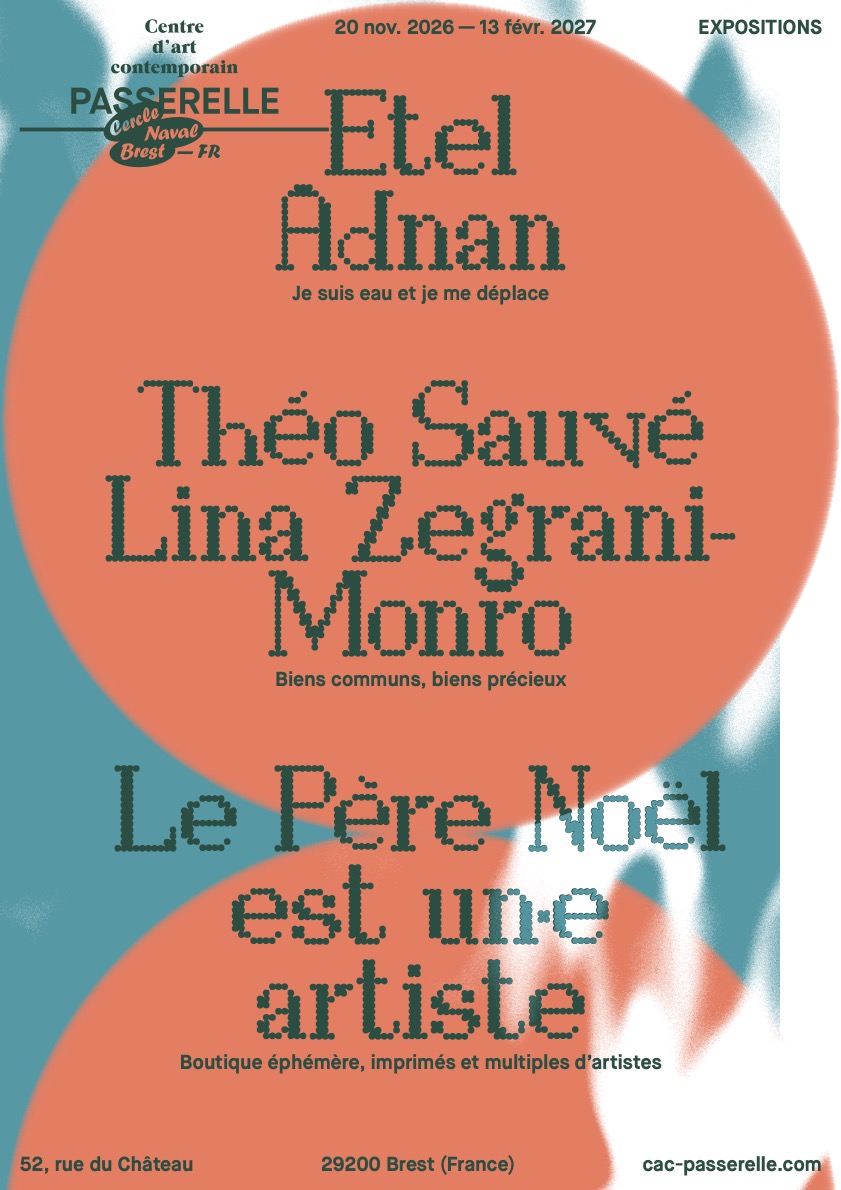
Théo Sauvé & Lina Zegrani-Monro : Biens communs, biens précieux

Exhibition
The word ‘good’ has several meanings that intersect and complement one another. It carries within it a profound ambiguity, constantly oscillating between the moral value of what is right, the materiality of possession, the measure of intensity, or the reinforcement of certainty. It refers just as much to a physical or moral state as it does to a notion of utility or profit. It is this dual meaning that serves as the guiding thread linking the projects of Théo Sauvé and Lina Zegrani-Monro, both winners of the Chantiers-Résidence in 2026, a programme run by Passerelle and DDA Bretagne.
Although their approaches are distinct, Théo Sauvé and Lina Zegrani-Monro draw on tangible elements to explore the close links between the mechanisms of the gaze and the status of the things around us. In both cases, looking is never a neutral act: it is the chosen frame that determines what becomes visible, desirable, precious or negligible.
In *Ici et là, la Mayenne* by Théo Sauvé, which brings together a triptych of videos, a series of paintings and written works, the artist’s gaze rests attentively and intimately upon the village of his childhood. He lingers on those places we pass through without necessarily seeing them – roads, car parks, urban fringes and outlying areas – but also on the gestures of friends, familiar places and the fleeting moments that make up everyday life. The artist films, writes and paints, then revisits the images and places, transferring them from one medium to another. Through these shifts, an ordinary landscape becomes an image to be looked at, an image transforms into material to be replayed, and a moment reveals itself in a different light. Her works thus lend depth to what usually remains in the background, revealing the emotional value of familiar places and gestures, beyond their function or apparent banality. The ‘commons’ of the title are thus to be understood in the singular as a reference to what connects us to one another. By drawing attention to these ordinary places and moments, the artist reveals what, in our shared daily experiences, constitutes a collective wealth that is often invisible, yet essential.
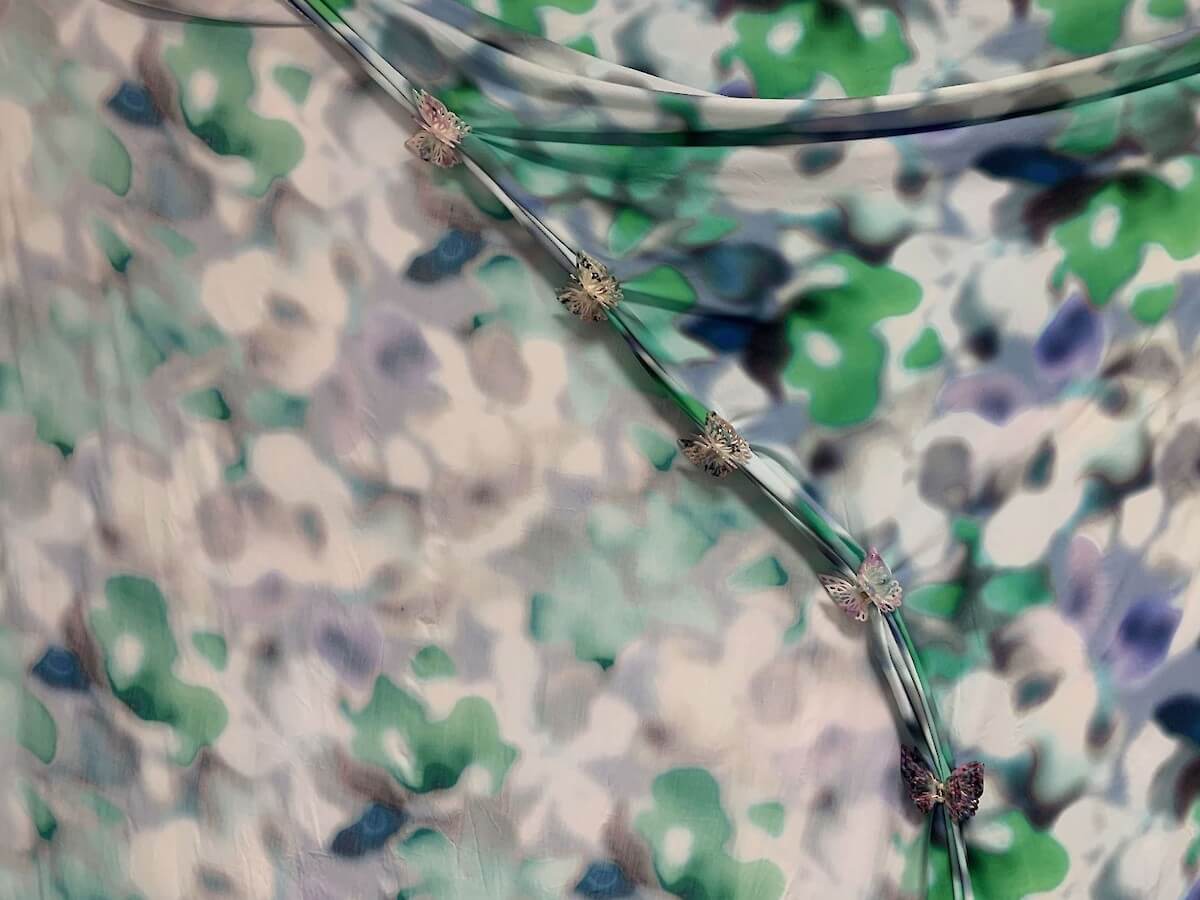
With Lina Zegrani-Monro, the title takes on a different meaning. In *Nobody Can Tell the Difference and Everyone Admires Them*, a project combining video, sculpture and installation, the artist traces the history of acetate, a material initially used to imitate precious materials such as tortoiseshell or ivory, before being used in the manufacture of film stock and finding its way into everyday objects, from spectacles to hair clips – mass-produced and sometimes almost disposable. By exploring the transformations of this material, she examines the boundaries between the ordinary and the precious, as well as the way we look at and assign value to things. From the portholes of ocean liners to opticians’ display windows and cinema auditoriums, the works trace a journey through different visual frameworks, where seemingly disparate objects and stories resonate with one another. By repositioning and combining them, the artist reveals the economic realities, uses and imaginaries they embody.
Navigating the spectrum between the personal and the collective, the intimate and the economic, the ephemeral and the enduring, Théo and Lina’s works gently shift the boundaries of our attention. They invite us to look again, and perhaps to ask ourselves what, around us, deserves to be (re)examined.
Guest curator: Katia Porro
As part of Chantiers | Résidence, a programme for emerging artists in Brittany run by Passerelle Centre d’art contemporain and Documents D’Artistes Bretagne
Services
| Access | Free |
Date(s)
From 20 November 2026 to 13 February 2027 from 13:00 to 18:00Practical information
| Adress |
Passerelle Centre d'Art Contemporain Office de Tourisme Brest en vue 52 Rue du Château 29200 Brest |
| Phone | 02 98 43 34 95 |
| contact@cac-passerelle.com | |
| Go to the website |