
Site archéologique d’Iliz-Coz

Historical sites and monuments
Archeology, Calvary and parish nclosures, Church, Ruins and remains, Archeological site
Opening hours 2026: Sundays and public holidays 2.30 pm – 5 pm (excluding school holidays); short school holidays: Sundays and Mondays 2.30 pm – 5 pm; and from 15 June to 15 September, daily 2.30 pm – 6 pm.
The parish churchyard swallowed up by the sands
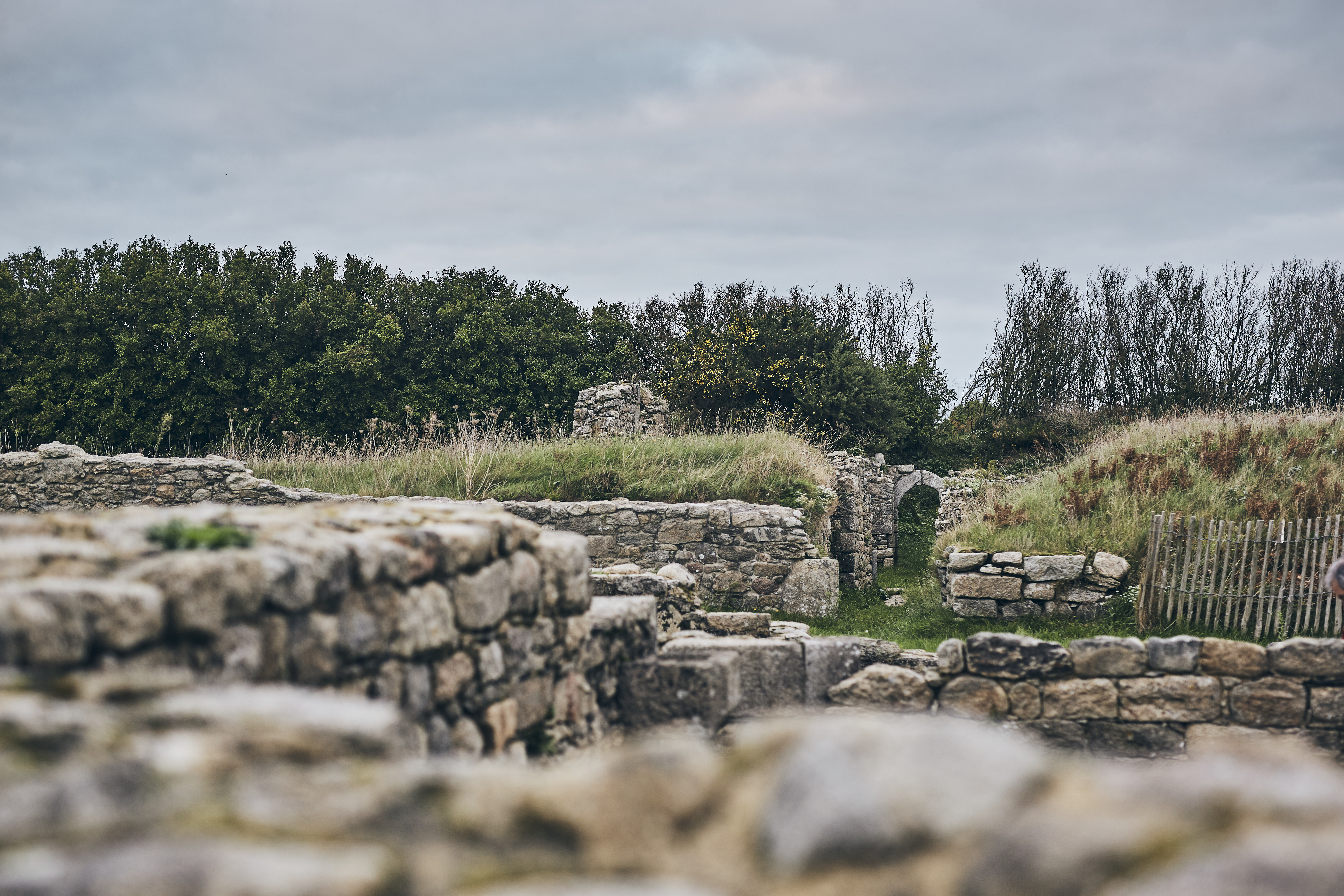
Just a stone’s throw from the sea, at a place called Saint-Michel in the commune of Plouguerneau, lies one of the most moving archaeological sites in the Pays des Abers. Iliz Koz — ‘the old church’ in Breton — is the former parish church of Tréménac’h, a village of monks, which lay buried for centuries beneath the sands of the Léon coast and has been brought back to light through painstaking excavations.
Tréménac’h, a forgotten parish
Tréménac’h is a word derived from the Old Breton ‘treb’, meaning ‘village’, and the Breton ‘menec’h’, meaning ‘monks’. For centuries, this ancient parish on the north coast of Léon was home to a very real religious and community life, with its church dedicated to the Holy Trinity, its presbytery, its manor houses, its mills and its chapels.
The parish church, without a transept, was surrounded by its enclosure: a cemetery to the south, an attached ossuary, and the Parscau family’s seigneurial chapel. Nearby, Michel Le Nobletz, the founder of the Breton Missions, spent a year as a hermit between 1607 and 1608. Abers-patrimoine
Silting up: a natural tragedy
The silting up of this shoreline appears to be due to marine regression: a cooling of the climate is thought to have caused sea levels to fall, with the winds then drying out the foreshores and forming dunes that were driven inland during storms.
As early as 1550, the archives of Menan Manor record ‘land sold due to sand encroachment’. The critical threshold was reached around 1700, and the following three decades saw a veritable deluge of sand descend upon the enclosure, reaching several metres in height in places. In the end, parishioners trapped inside the church were forced to escape via the roofs. In 1729, the church was abandoned and worship moved to the Martyre Chapel.
The rediscovery: a collective effort
In 1969, earth-moving machinery at a building site struck upon gravestones and walls. Dr Gérard Philipps, a researcher from Brest, undertook the initial excavations, soon joined by volunteers. The municipality of Plouguerneau acquired the land in 1977 and, from the 1980s onwards, a series of gradual sand-removal campaigns restored the site to its full visibility. An association of passionate volunteers has been organising guided tours ever since.
What you’ll find there
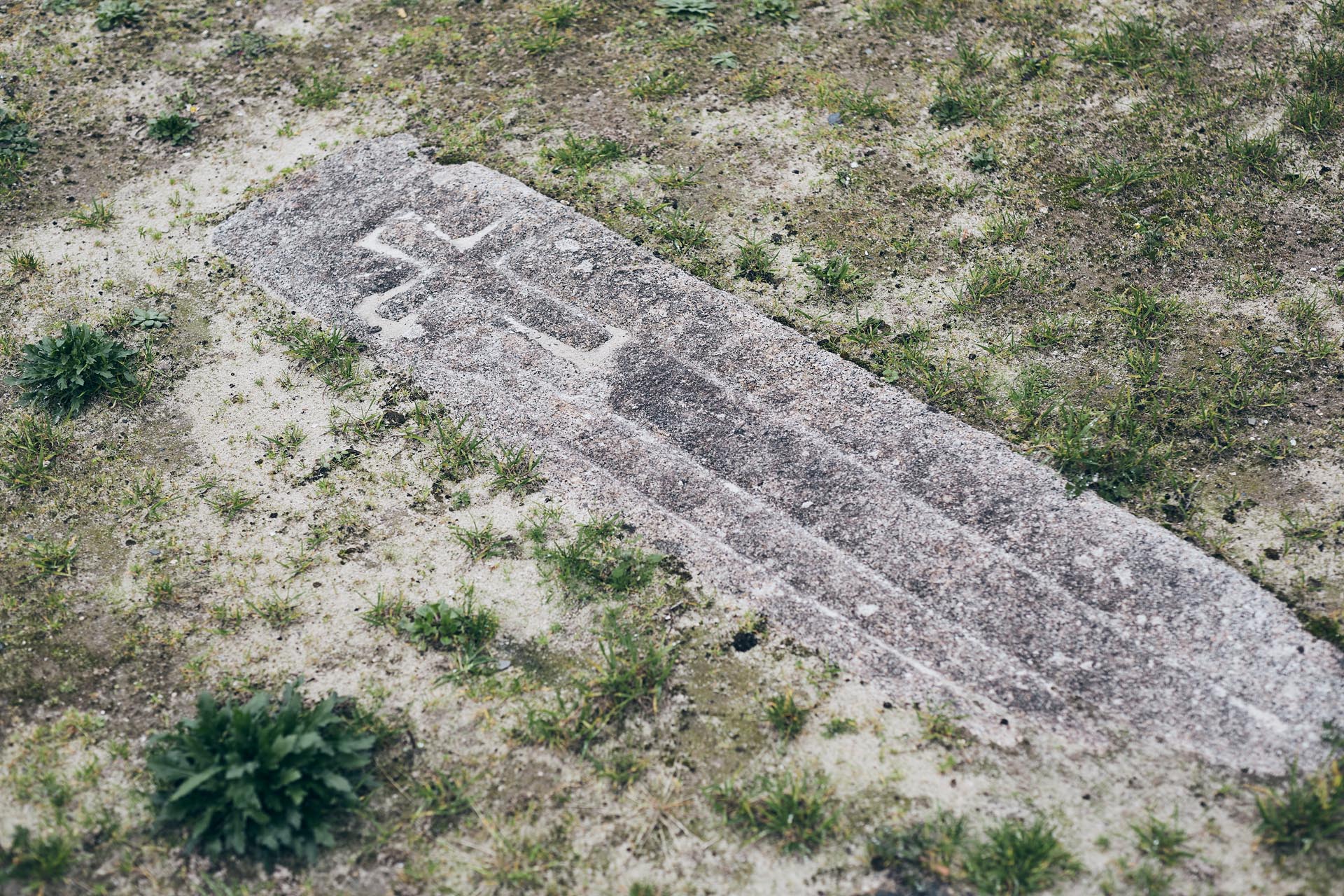
The site reveals a remarkably well-preserved medieval parish enclosure beneath its layer of sand. The cemetery has yielded nearly a hundred gravestones, nineteen of which bear engravings: knights’ swords and shields, priests’ chalices, trade emblems — including that of a weaver — and, most exceptionally, a slab adorned with a caravel at anchor, a rare testament to Breton maritime trade in the late Middle Ages.
Inside the church, the walls revealed five superimposed layers of murals, ranging from a 13th-century pattern of Gothic roses to early 17th-century geometric designs, including a 15th-century depiction of a knight or archangel framed by coats of arms. These paintings, which have been carefully restored, are now on display in the site’s visitor centre.
In the presbytery, during the sand-removal work in 1992, three keystones were found carefully placed on one of the windows — the final gesture of the last inhabitant before leaving the premises for good. They are kept at the site’s museum.
The parish churchyard swallowed up by the sands
Just a stone’s throw from the sea, at a place called Saint-Michel in the commune of Plouguerneau, lies one of the most moving archaeological sites in the Pays des Abers. Iliz Koz — ‘the old church’ in Breton — is the former parish church of Tréménac’h, a village of monks, which lay buried for centuries beneath the sands of the Léon coast and has been brought back to light through painstaking excavations.
Tréménac’h, a forgotten parish
Tréménac’h is a word derived from the Old Breton ‘treb’, meaning ‘village’, and the Breton ‘menec’h’, meaning ‘monks’. For centuries, this ancient parish on the north coast of Léon was home to a very real religious and community life, with its church dedicated to the Holy Trinity, its presbytery, its manor houses, its mills and its chapels.
The parish church, without a transept, was surrounded by its enclosure: a cemetery to the south, an attached ossuary, and the Parscau family’s seigneurial chapel. Nearby, Michel Le Nobletz, the founder of the Breton Missions, spent a year as a hermit between 1607 and 1608. Abers-patrimoine
Silting up: a natural tragedy
The silting up of this shoreline appears to be due to marine regression: a cooling of the climate is thought to have caused sea levels to fall, with the winds then drying out the foreshores and forming dunes that were driven inland during storms.
As early as 1550, the archives of Menan Manor record ‘land sold due to sand encroachment’. The critical threshold was reached around 1700, and the following three decades saw a veritable deluge of sand descend upon the enclosure, reaching several metres in height in places. In the end, parishioners trapped inside the church were forced to escape via the roofs. In 1729, the church was abandoned and worship moved to the Martyre Chapel.
The rediscovery: a collective effort
In 1969, earth-moving machinery at a building site struck upon gravestones and walls. Dr Gérard Philipps, a researcher from Brest, undertook the initial excavations, soon joined by volunteers. The municipality of Plouguerneau acquired the land in 1977 and, from the 1980s onwards, a series of gradual sand-removal campaigns restored the site to its full visibility. An association of passionate volunteers has been organising guided tours ever since.
What you’ll find there
The site reveals a remarkably well-preserved medieval parish enclosure beneath its layer of sand. The cemetery has yielded nearly a hundred gravestones, nineteen of which bear engravings: knights’ swords and shields, priests’ chalices, trade emblems — including that of a weaver — and, most exceptionally, a slab adorned with a caravel at anchor, a rare testament to Breton maritime trade in the late Middle Ages.
Inside the church, the walls revealed five superimposed layers of murals, ranging from a 13th-century pattern of Gothic roses to early 17th-century geometric designs, including a 15th-century depiction of a knight or archangel framed by coats of arms. These paintings, which have been carefully restored, are now on display in the site’s visitor centre.
In the presbytery, during the sand-removal work in 1992, three keystones were found carefully placed on one of the windows — the final gesture of the last inhabitant before leaving the premises for good. They are kept at the site’s museum.
Prestations et services
| Groupes |
Acceptés
Nombre de personnes minimum : 10 |
Practical information
| Adress |
Site archéologique d’Iliz-Coz 188 Lieu-dit Iliz Koz 29880 Plouguerneau |
| ilizkoz.plouguerneau@gmail.com | |
| Go to the website |